
Witnessing the End: The Ethics of the 2026 "Last-Chance" Glacial Surge
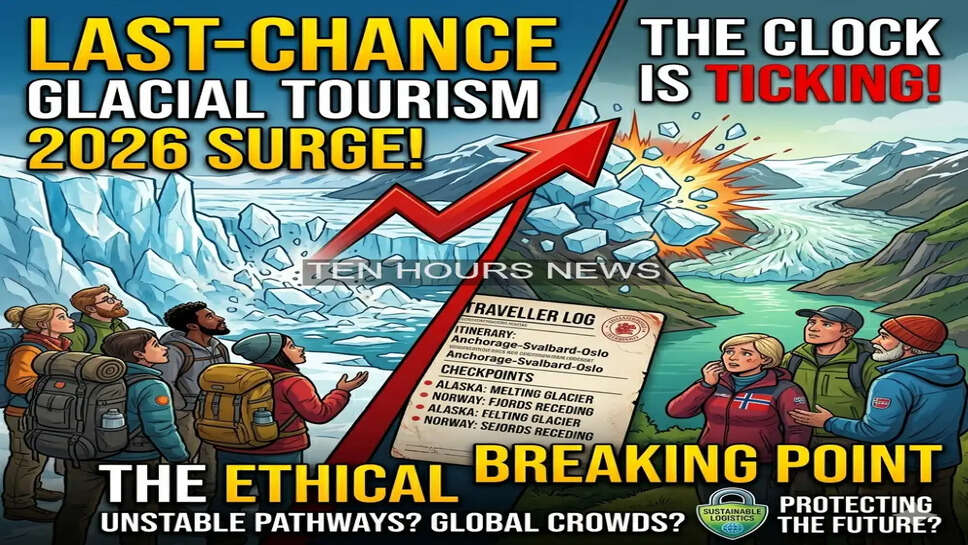
The 2026 travel season has seen a staggering 14 million visitors flock to the world’s most famous ice fields, driven by a phenomenon researchers call "Last-Chance Tourism." In regions like Alaska’s Glacier Bay and Norway’s Jostedalsbreen ice cap, the narrative has shifted from simple sightseeing to a frantic race against the clock. Travelers are spending thousands to witness receding blue walls of ice before they vanish, yet this surge in popularity is creating a "moral trap." The very act of visiting these fragile ecosystems—often involving high-emission flights and helicopter tours—is accelerating the climate processes causing their demise.
This year, the ethical tension has reached a breaking point. While the influx of visitors provides a critical economic lifeline for some remote communities, much of the revenue is being captured by large, outside tour operators, leaving local populations to manage the environmental fallout. In Norway, recent 2026 studies show that the thinning of major ice caps is actually creating a feedback loop, resulting in a warmer, drier regional climate that further speeds up the melt. For the modern traveler, the choice to visit has become a complex calculation: is the "ecological awakening" gained from seeing a dying glacier worth the carbon footprint required to get there?
The Logistical Strain of 14 Million Visitors
The sheer volume of traffic in 2026 is overwhelming local infrastructure and forcing a radical rethink of how we access protected lands.
-
Infrastructure "Maladaptation": To keep up with demand, some regions have installed artificial walkways and geotextile covers to preserve access to melting ice. Critics argue these are "band-aid" solutions that mask the reality of climate change while further disturbing the local terrain.
-
The Helicopter Conflict: In Alaska, the rise of "flightseeing" tours has led to increased CO2 emissions and noise pollution that disrupts wildlife. Federal agencies are under pressure to cap flight numbers as residents push for quieter, lower-impact alternatives.
-
The "No List" Reality: Destinations like Glacier National Park have officially landed on "No Travel" lists for 2026. Experts are advising travelers to stay away to allow the overstressed trails and local water systems a chance to recover from the "last-chance" frenzy.
2026 Glacial Tourism: The Conflict of Interest
| Metric | Standard Tourism (Legacy) | Last-Chance Surge (2026) |
| Primary Driver | Natural Beauty / Adventure. | Fear of Irreversible Loss. |
| Environmental Impact | Moderate / Localized. | High / Accelerated by Emissions. |
| Economic Beneficiary | Local Communities. | Global Tour Operators. |
| Emotional Tone | Wonder and Awe. | "Ecological Grief" and Urgency. |
| Future Outlook | Sustainable Growth. | Terminal "Dark Tourism" Transition. |
Navigating the Ethical Crossroad
As we move through 2026, the travel industry is being forced to implement more aggressive "Resilience Engineering" strategies.
-
Mandatory Carbon Removal: Some high-end Norwegian tours now include a mandatory surcharge for direct air capture (DAC) projects, attempting to make the journey "carbon-neutral," though the efficacy of these programs remains a subject of heated debate.
-
Shifting to "Glacier Funerals": A new trend in 2026 involves tourists attending commemorative "funerals" for vanished ice fields. This shifts the focus from consumerism to activism, encouraging a somber reflection on loss rather than a "bucket-list" checkmark.
-
Local Revenue Sovereignty: New 2026 regulations in Alaska are beginning to mandate that a higher percentage of tour fees stay within Indigenous and local communities to help them fund the infrastructure repairs necessitated by climate-driven landslides and flooding.
Conclusion
Last-Chance Glacial Tourism is the ultimate paradox of the 2020s. We are witnessing a world where 60% of ice volumes could be gone by the end of the century, and the desperate urge to see it one last time is paradoxically bringing that end closer. In 2026, the most responsible way to "see" a glacier might be to choose restraint—finding beauty in accessible, local environments rather than contributing to the extraction of a dying landscape. Witnessing the melt is powerful, but only if it leads to a fundamental shift in behavior. If not, "last chance" will simply become a permanent business model for a world in decline.
FAQs
What is "Last-Chance Tourism"?
It is a trend where people travel specifically to see vanishing natural wonders, like glaciers or coral reefs, before they disappear due to climate change.
Why is 2026 a peak year for this?
Rapid warming and high-profile media coverage of retreating ice have created an "urgency surge," with 14 million people visiting glaciers this year alone.
Does visiting a glacier actually help?
While some visitors return home inspired to take climate action, the carbon emissions from long-haul travel often outweigh the individual "awareness" gained.
What is the "No List" for 2026?
It is a recommendation from travel experts to avoid certain over-stressed destinations, like Glacier National Park, to prevent further ecological damage.
How does glacial melt affect local people?
Receding ice can lead to water scarcity, shifting seasonal flows, and natural hazards like landslides, often in areas where the local population sees little of the tourism profit.
What are "Glacier Funerals"?
These are commemorative events where people gather to mourn the loss of a specific glacier, turning a tourist visit into a form of political and ecological theater.