
“Circadian-Sync” Living – Smart Homes and Wearable Tech Are Redefining Human Health Through DNA Clock Gene Optimization
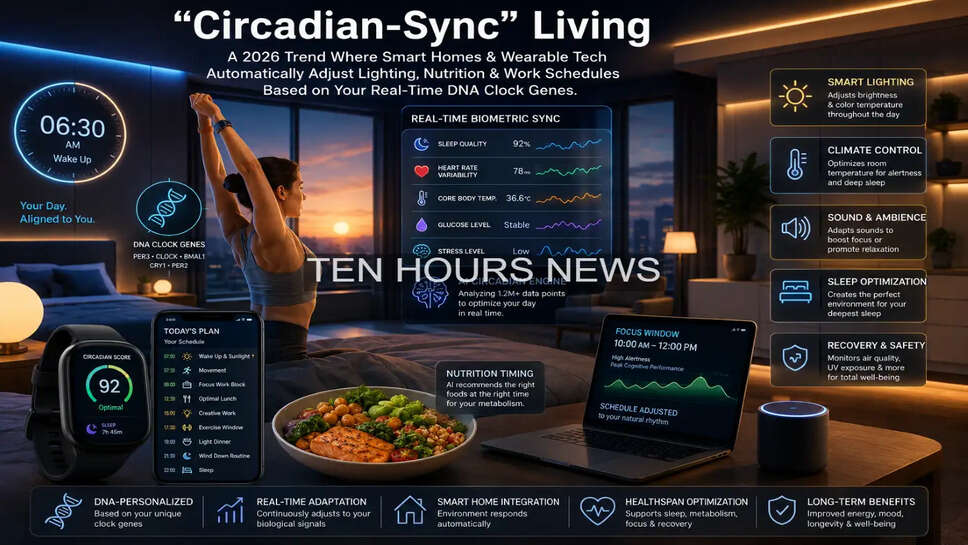
The future of wellness is no longer centered only on fitness routines, calorie tracking, or generic sleep advice. A revolutionary movement called Circadian-Sync Living is transforming how people structure their daily lives by aligning environments, nutrition, and work schedules with their unique biological timing systems.
Powered by wearable technology, artificial intelligence, genetic analysis, and smart home ecosystems, Circadian-Sync Living represents one of the most advanced health optimization trends of the decade. Instead of treating everyone with standardized wellness routines, this new model personalizes human performance according to individual DNA clock genes, real-time metabolic signals, and circadian rhythms.
For decades, scientists understood that the human body operates according to internal biological clocks regulating sleep cycles, hormone production, energy metabolism, digestion, cognitive performance, and cellular repair. However, 2026 marks the point where consumer technology can finally measure, interpret, and adapt to these rhythms continuously in real time.
As smart homes automatically dim lights, wearable devices optimize nutrition timing, and AI scheduling systems redesign work productivity around biological energy peaks, Circadian-Sync Living is redefining modern health and longevity.
Understanding Circadian Rhythms and Clock Genes
Circadian rhythms are natural 24-hour biological cycles that regulate nearly every major function in the human body. These rhythms influence:
- Sleep and wake cycles
- Hormone release
- Body temperature
- Cognitive performance
- Digestion and metabolism
- Immune system activity
- Cellular repair processes
At the center of these rhythms are specialized clock genes, including PER, CLOCK, BMAL1, and CRY genes, which help synchronize the body’s internal timing systems.
Research now shows that individuals possess unique genetic chronotypes. Some people naturally perform better early in the morning, while others experience peak cognitive and physical performance later in the day.
Traditional lifestyles often forced people into rigid schedules that ignored these biological differences. Circadian-Sync Living changes that completely by adapting environments to the individual rather than forcing the individual to adapt to fixed societal structures.
Why 2026 Became the Turning Point
Several technological breakthroughs converged in 2026, making Circadian-Sync Living commercially viable for mainstream consumers.
First, wearable devices became significantly more advanced. Modern smart rings, biometric patches, and AI-powered watches now continuously monitor sleep stages, cortisol levels, heart rate variability, glucose patterns, and body temperature with medical-grade precision.
Second, home automation systems evolved dramatically. Smart homes can now adjust lighting temperature, brightness, room climate, sound environments, and even scent diffusion automatically based on biological signals.
Third, AI health platforms became capable of integrating genetic data with real-time physiological tracking. This allows systems to identify optimal windows for productivity, exercise, eating, recovery, and sleep based on an individual’s DNA-driven circadian profile.
Together, these innovations created a fully synchronized wellness ecosystem.
Smart Homes Designed Around Human Biology
One of the most fascinating aspects of Circadian-Sync Living is the rise of biologically responsive smart homes.
Unlike older smart home systems focused mainly on convenience, 2026 environments prioritize metabolic optimization and nervous system regulation.
Modern Circadian-Sync homes automatically:
- Shift lighting tones throughout the day
- Simulate sunrise and sunset patterns
- Reduce blue light exposure at night
- Adjust indoor temperatures for sleep quality
- Control sound frequencies for focus or recovery
- Coordinate meal preparation schedules
- Optimize air quality during sleep cycles
Morning lighting systems now mimic natural sunlight exposure to stimulate cortisol awakening responses and improve energy levels. In the evening, warmer amber lighting encourages melatonin production for deeper sleep.
The home itself becomes an active participant in health optimization.
Wearable Technology as a Biological Command Center
Wearable technology has become the foundation of the Circadian-Sync ecosystem.
Modern devices continuously collect biological data including:
- Sleep efficiency
- Stress response patterns
- Recovery scores
- Blood glucose fluctuations
- Core body temperature
- Hormonal rhythm indicators
- Movement and activity patterns
AI systems analyze this information constantly and make personalized recommendations throughout the day.
For example, if a wearable detects elevated stress markers and disrupted sleep, the system may automatically delay high-focus work tasks, adjust caffeine timing, recommend restorative meals, and shift evening lighting earlier to accelerate recovery.
This creates a highly adaptive health environment driven by real-time biological intelligence.
Personalized Nutrition Timing and Metabolic Optimization
Circadian-Sync Living is also transforming nutrition science.
Researchers increasingly recognize that when people eat may be nearly as important as what they eat. Metabolism, insulin sensitivity, digestion, and nutrient absorption fluctuate significantly throughout the day according to circadian rhythms.
AI-driven nutrition systems now personalize:
- Meal timing
- Macronutrient distribution
- Hydration schedules
- Supplement timing
- Caffeine intake windows
- Fasting protocols
For example, individuals genetically predisposed to stronger morning metabolism may receive larger breakfast-focused nutritional plans, while evening chronotypes may optimize energy intake later in the day.
This precision approach supports better metabolic flexibility, improved energy regulation, and long-term healthspan.
The Workplace Evolution Toward Biological Productivity
The corporate world is also adapting rapidly to Circadian-Sync principles.
Forward-thinking companies in 2026 are beginning to redesign workflows around employee chronotypes and biological performance data.
Instead of rigid 9-to-5 structures, AI scheduling systems optimize work based on periods of peak concentration and recovery.
Employees may receive:
- Personalized deep-work windows
- Recovery-focused break scheduling
- Meeting recommendations aligned with cognitive energy
- Dynamic lighting and environmental adjustments
- Burnout prevention alerts
Studies increasingly show that biologically aligned work schedules improve productivity, creativity, decision-making, and employee well-being.
This shift is gradually redefining the future of workplace performance.
Longevity and Preventive Health Benefits
One of the biggest reasons Circadian-Sync Living gained momentum is its connection to longevity science.
Chronic circadian disruption has been linked to:
- Obesity
- Diabetes
- Cardiovascular disease
- Depression and anxiety
- Hormonal imbalance
- Neurodegenerative decline
- Immune dysfunction
By aligning daily behaviors with biological rhythms, experts believe individuals can reduce systemic stress and improve long-term metabolic resilience.
Many preventive health programs now integrate circadian optimization alongside exercise, nutrition, and sleep interventions.
Privacy and Ethical Concerns
Despite its advantages, Circadian-Sync technology raises important ethical and privacy questions.
Continuous biological monitoring generates enormous amounts of sensitive personal data. Concerns include:
- Health data security
- Employer surveillance risks
- Insurance discrimination
- Genetic privacy
- Algorithmic decision-making transparency
As the industry expands, governments and healthcare regulators are developing stricter guidelines regarding biometric data protection and AI-driven wellness systems.
Balancing innovation with individual privacy rights will remain a major challenge moving forward.
Conclusion
Circadian-Sync Living represents one of the most significant health and technology revolutions of 2026. By combining smart homes, wearable devices, genetic analysis, and artificial intelligence, this movement is creating deeply personalized environments optimized for human biology.
Instead of forcing individuals into universal schedules and wellness routines, Circadian-Sync systems adapt dynamically to each person’s internal clock genes and real-time physiological state. From lighting and nutrition to productivity and recovery, every aspect of daily life becomes biologically synchronized.
As research into circadian science continues advancing, the future of health may depend less on generalized recommendations and more on precision lifestyle timing. In this emerging era of personalized wellness, optimizing human performance is no longer only about effort or discipline. It is increasingly about living in harmony with the body’s natural biological rhythm.
FAQs
What is Circadian-Sync Living?
Circadian-Sync Living is a 2026 wellness trend where smart technology adapts environments and routines based on an individual’s biological rhythms and DNA clock genes.
What are clock genes?
Clock genes regulate the body’s internal circadian rhythms, influencing sleep, metabolism, energy, and cognitive performance.
How do smart homes support circadian health?
Smart homes automatically adjust lighting, temperature, sound, and environmental settings to optimize sleep and daily performance.
Why is nutrition timing important?
Metabolism changes throughout the day, and properly timed meals may improve energy, blood sugar regulation, and long-term metabolic health.
Are there privacy concerns with Circadian-Sync technology?
Yes. Continuous biometric monitoring raises concerns about health data security, genetic privacy, and AI-driven decision-making transparency.