
The Epigenetic Clock: How 2026 Longevity Clinics are Commercializing Biological Age Reversal through DNA-Based Bio-Hacking.
This article examines the 2026 explosion of the "Age Tech" market, where longevity clinics are utilizing advanced epigenetic testing (like DunedinPACE) and cellular reprogramming to offer personalized, measurable biological age reversal protocols to a global elite.
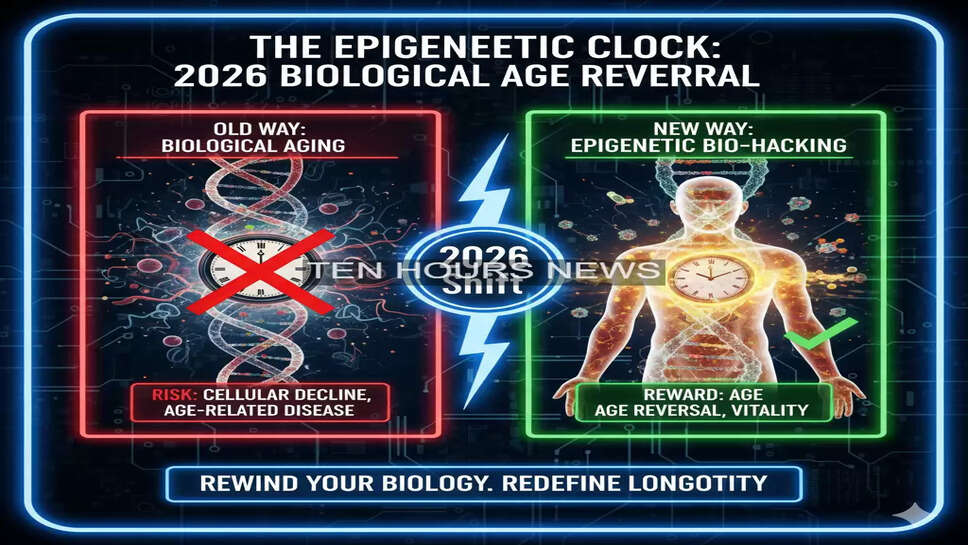
In January 2026, the age-old question "How old are you?" has two different answers. One is found on your birth certificate; the other is found in your Epigenetic Clock. For the first time in medical history, biological age—the true functional state of your cells—is no longer a theoretical concept but a commercialized metric. High-end longevity clinics from Dubai to Silicon Valley have officially pivoted from "preventative medicine" to "reversal medicine." Using advanced DNA methylation testing, these clinics are not just telling patients they look younger; they are providing digital proof that their internal "biological clock" has been wound back by 2, 5, or even 10 years.
The catalyst for this 2026 boom is the refinement of the DunedinPACE clock and the commercialization of Epigenetic Reprogramming. While the 2024–2025 period was characterized by "lifestyle hacking" (diet and cold plunges), the 2026 landscape is dominated by high-tech interventions—senolytics, growth hormone cocktails, and the first human trials of gene-based rejuvenation—all tracked via the inescapable precision of the epigenetic clock.
The New Gold Standard: DunedinPACE vs. The "True Age"
In 2026, the "Horvath Clock" (the original measure of biological age) has evolved. Clinics now prioritize the DunedinPACE (Pace of Aging from the Co-Evolved epigenome) as the primary KPI for their patients. Unlike earlier clocks that provided a static age, DunedinPACE measures the speed at which a person is currently aging—effectively acting as a "speedometer" for your mortality.
[Image: A comparison chart of 2026 Epigenetic Clocks: "Static Biological Age" (where you are now) vs. "Pace of Aging" (how fast you are moving toward old age). The latter is shown as a dial with a needle in the "Slow" green zone.]
Longevity directors report that this "Pace" metric is the most effective tool for patient retention. When a 2026 biohacker can see that their current protocol (a mix of Metformin, Rapamycin, and Hyperbaric Oxygen) has slowed their aging rate to 0.65 years per chronological year, they are far more likely to invest in expensive, multi-month "Age Reset" packages that can cost upwards of $50,000.
The "Age Reset" Protocol: From Supplements to Gene Therapy
The 2026 commercial landscape for age reversal is tiered into three distinct levels of "Bio-Hacking":
-
Tier 1: Targeted Methylation Support (The Consumer Entry): Companies like Eucerin have launched the first "Epigenetic Serums" (featuring ingredients like Epicelline®) that use AI-based skin clocks to reactivate "youth genes" at a surface level.
-
Tier 2: The Metabolic Reset (The Clinic Standard): Clinics are prescribing the "TRIIM-X" protocol—a refined version of the original TRIIM trial using rhGH (Human Growth Hormone), DHEA, and Metformin to regrow the thymus gland and reset the immune system's age.
-
Tier 3: Cellular Reprogramming (The Frontier): Billion-dollar startups like Altos Labs (backed by Jeff Bezos) and Retro Biosciences (backed by Sam Altman) have moved into early human trials. By January 2026, Life Biosciences has begun the first human gene therapy trials for NAION (blindness), aiming to "reset" the epigenetic markers of damaged cells to a younger state.
The Business of Longevity: Measuring the ROI of Youth
The 2026 longevity clinic is less like a doctor's office and more like a high-end data hub. Patients are equipped with "Continuous Longevity Monitors" that track everything from heart rate variability to real-time glucose and NAD+ levels. This data is fed into an AI that optimizes the "Epigenetic Intervention Strategy" every 90 days.
[Image: A 2026 "Longevity Dashboard" on a tablet. It shows a profile of a 54-year-old male with a biological age of 42.1. A graph shows a downward trend in "Aging Velocity" over the last 12 months.]
The economic shift is profound. We are seeing the rise of "Longevity Real Estate" (Agrihoods with built-in clinics) and "Longevity Insurance," where premiums are tied to your Epigenetic Clock score. If you can prove you are aging slower than average, your insurance costs drop—effectively creating a financial incentive to stay biologically young.
Conclusion
In 2026, "Aging" is no longer an inevitable decline; it is a "treatable condition." The commercialization of the Epigenetic Clock has transformed biohacking from a fringe hobby into a standardized medical industry. As we move through the rest of 2026, the focus will shift from measuring age to mastering it. While the cost of these interventions remains high, the rapid advancement of the science suggests that "Biological Age Reversal" may soon be as common—and as measurable—as checking your blood pressure.
FAQs
What is an Epigenetic Clock? It is a biochemical test that measures DNA methylation—small chemical tags on your DNA—to estimate your "biological age" as opposed to your "chronological age."
Can I actually reverse my age in 2026? Yes, clinically. Studies (like the TRIIM trial) have shown that specific combinations of drugs and lifestyle changes can "wind back" the epigenetic clock by an average of 1.5 to 3 years within a year of treatment.
Is it safe to take anti-aging drugs like Rapamycin? In 2026, many longevity clinics prescribe these "off-label" under strict supervision. While promising, long-term human trials for general "age reversal" are still ongoing.
How much does a biological age test cost in 2026? High-fidelity tests like DunedinPACE or Novos Age now cost between $300 and $500, making them accessible to a broader range of "optimizers."
Are these treatments available to everyone? Currently, the most advanced "Age Reset" protocols are expensive and primarily available through private longevity clinics. However, consumer-level "epigenetic skincare" and "precision nutrition" are becoming mainstream in 2026.