
The 2026 Mosquito Defense: 5 Essential Strategies for a Bite-Free Summer
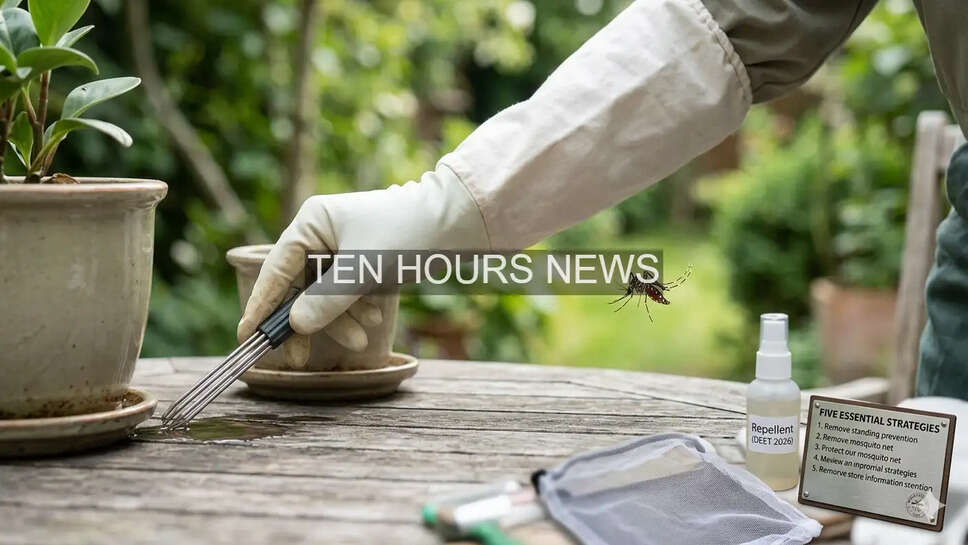
As temperatures rise in May 2026, entomologists are warning of an intensified mosquito season driven by a warmer, wetter spring across much of the United States. With the expanding range of species like Aedes aegypti and Aedes albopictus, the risk of traditional illnesses such as West Nile Virus is now coupled with emerging 2026 concerns regarding Dengue and Zika in southern latitudes. Preventing bites is no longer just about avoiding an itch; it is a critical component of household health.
Public health experts and entomologists have moved beyond simple sprays, advocating for a multi-layered defense strategy. This year, the focus is on "Precision Prevention"—using a combination of biological controls, habitat modification, and advanced wearable technology to create a protective barrier around your home and family.
1. The "Source Reduction" Audit
The most effective way to manage mosquitoes is to stop them before they take flight. In 2026, entomologists emphasize the "three-day rule": any standing water must be drained every 72 hours to disrupt the egg-laying cycle.
-
Hidden Reservoirs: Check beyond birdbaths. Clogged gutters, corrugated plastic drainage pipes, and even the saucers under outdoor plants are primary breeding grounds.
-
BTI Infusion: For water that cannot be drained (like ponds or rain barrels), utilize BTI (Bacillus thuringiensis israelensis) dunks. This naturally occurring bacterium kills larvae but is safe for pets, birds, and beneficial insects.
2. Spatial Repellents and "Air Curtains"
In 2026, the use of spatial repellents has overtaken the traditional smoky coil. New devices utilize metered-dose technology to release odorless, EPA-approved repellents like Metofluthrin or Allethrin in a localized area.
-
Fan Dynamics: Mosquitoes are weak fliers. Setting up high-velocity floor fans on your patio creates an "air curtain" that makes it physically impossible for mosquitoes to land.
-
Automated Misters: For 2026, smart-misting systems can be programmed via mobile apps to release repellent only during peak "crepuscular" hours (dawn and dusk) when activity is highest.
3. Advanced Wearable Barriers
The "bug spray" of 2026 has evolved. While DEET remains the gold standard for heavy-duty protection, new formulations offer longer-lasting efficacy with better skin-feel.
-
Picaridin 20%: Entomologists frequently recommend Picaridin as a top alternative to DEET; it is odorless, non-greasy, and won't damage plastics or synthetic fabrics.
-
Permethrin-Treated Gear: For hikers and gardeners, pre-treating clothing with Permethrin remains a top 2026 strategy. This odorless repellent binds to fabric fibers and remains effective through 70 washes, acting as a "contact-kill" barrier for mosquitoes and ticks.
4. Biological Decoys and Traps
2026 marks a surge in the use of CO2-mimicking traps. These devices simulate human breath and heat to lure mosquitoes away from seating areas and into a capture chamber.
-
Ovitraps: These "lethal" egg-laying sites attract pregnant females and utilize a treated sticky pad to trap them before they can deposit eggs, effectively reducing the local population over time.
-
Native Predators: Encouraging natural predators, such as bats and dragonflies, by installing bat houses and planting "pollinator-friendly" gardens helps maintain a balanced ecosystem that naturally keeps pest numbers in check.
5. Neighborhood-Scale Coordination
Mosquitoes do not respect property lines. The most successful 2026 prevention plans involve community-wide efforts.
-
The "Block Captain" Model: Many suburban areas are now appointing seasonal "Mosquito Leads" to coordinate the cleaning of communal drains and the distribution of BTI dunks for all neighbors.
-
Reporting Apps: Use local 2026 health department apps to report high-density swarms or neglected standing water in public spaces, allowing for targeted, eco-friendly professional treatments (such as "In2Care" traps) by municipal mosquito control districts.
Conclusion
The 2026 Summer Mosquito Prevention Guide highlights that a bite-free season is a matter of strategy, not luck. By combining meticulous source reduction with modern spatial repellents and community coordination, you can significantly lower your risk of exposure. As we move into the peak months of 2026, remember that the most effective repellent is the one you actually use. Stay informed about local health alerts, maintain your "air curtains," and enjoy the outdoors with the confidence of a well-protected perimeter.
FAQs
What is the best mosquito repellent in 2026? The EPA still recognizes DEET (25-30%) and Picaridin (20%) as the most effective long-wear repellents. For clothing, Permethrin-treated fabrics offer the best contact protection.
How often should I drain my birdbath? Entomologists recommend the "three-day rule." Empty and scrub birdbaths every 72 hours to ensure mosquito larvae cannot reach adulthood.
Are "Mosquito-Repellent Plants" effective? While plants like Citronella and Lavender contain repellent oils, they do not provide protection simply by sitting on a patio. They must be crushed to release the oils, and even then, the protection is very short-lived compared to topical repellents.
What is BTI? BTI is a naturally occurring soil bacterium that specifically targets mosquito and blackfly larvae. It is widely used in 2026 because it does not harm humans, pets, or beneficial insects like bees.
When is mosquito activity highest? Most species are "crepuscular," meaning they are most active during the dim light of dawn and dusk. However, the invasive Asian Tiger mosquito is a daytime biter, making 24-hour protection necessary in many areas.
Do ultrasound "bug zappers" work? Scientific studies in 2026 continue to show that ultrasound devices have no measurable effect on mosquito behavior. Traditional "zappers" often kill more beneficial insects than mosquitoes and are not recommended for effective control.