
Medicare 2026 GLP-1 Expansion: New Federal Guidelines for Weight-Loss Medication Coverage
Learn about Medicare’s 2026 GLP-1 expansion. Discover the BALANCE Model, $50 copay caps for weight-loss drugs, and BMI requirements for Ozempic, Wegovy, and Zepbound.
Jan 8, 2026, 03:49 IST
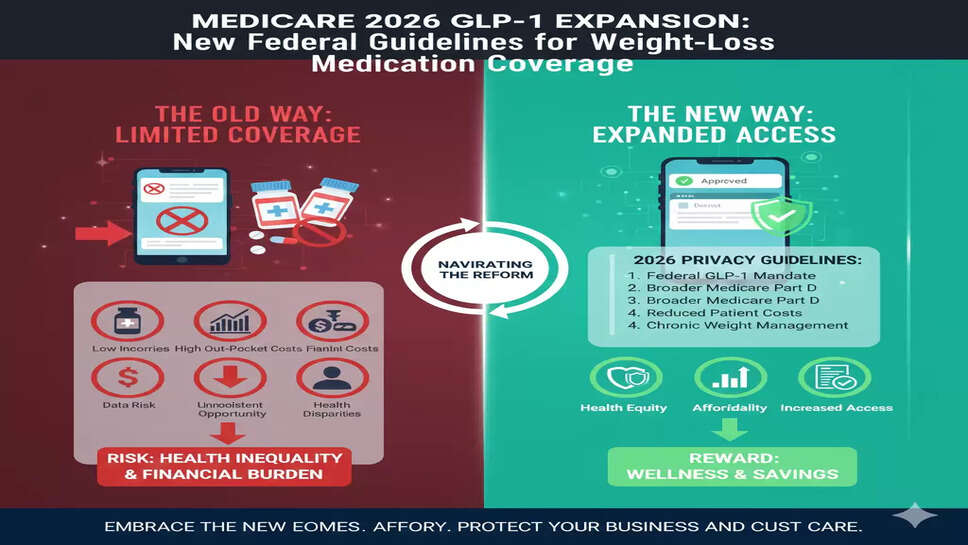
The year 2026 marks a historic turning point in federal healthcare policy as Medicare officially breaks its long-standing prohibition on covering medications specifically for weight loss. Under the One Big Beautiful Bill (OBBBA) Act and the newly unveiled BALANCE (Better Approaches to Lifestyle and Nutrition for Comprehensive hEalth) Model, the Centers for Medicare & Medicaid Services (CMS) has established a federal framework to provide millions of seniors access to life-changing GLP-1 receptor agonists.1 Previously, drugs like Ozempic, Wegovy, Mounjaro, and Zepbound were only covered if prescribed for Type 2 diabetes or specific cardiovascular risks.2 Starting in mid-2026, a massive pilot program will expand this coverage to include obesity as a primary diagnosis, provided patients meet specific clinical and metabolic criteria.3 This expansion is part of a broader "Make America Healthy Again" (MAHA) initiative aimed at reducing long-term chronic disease costs by treating obesity at its source.4
The BALANCE Model: A New Era of Prevention
The BALANCE Model is the primary vehicle for this 2026 expansion.5 Announced by CMS Administrator Dr. Mehmet Oz, the model is a voluntary alternative payment program designed to pair high-compute "breakthrough science" with traditional healthy living.6 Under BALANCE, CMS negotiates directly with manufacturers like Eli Lilly and Novo Nordisk to secure a "Most Favored Nation" (MFN) price for GLP-1s.7
-
Integrated Lifestyle Support: Unlike traditional coverage, the BALANCE Model requires that any beneficiary receiving a GLP-1 for weight management also be provided with a manufacturer-funded lifestyle support program at no cost.8 This includes nutrition counseling, fitness coaching, and metabolic tracking.9
-
Voluntary Pilot Phase: The program launches for state Medicaid agencies in May 2026 and serves as a voluntary pilot for Medicare Part D plans starting in July 2026.
-
Mandatory Transition: While voluntary in 2026, the BALANCE framework is scheduled to become a mandatory component of the Medicare Part D basic benefit starting January 1, 2027.10
2026 Eligibility: The Three-Tier BMI Framework
Not every Medicare beneficiary will qualify for GLP-1 coverage in 2026.11 CMS has established a strict "Phase-In" eligibility system focused on those at the highest metabolic or cardiovascular risk.12 To receive coverage under the 2026 pilot, a patient must fall into one of three specific cohorts:13
Tier |
Eligibility Criteria |
Additional Requirements |
Tier 1 |
BMI ≥ 27 |
History of Prediabetes, Stroke, or Established Cardiovascular Disease. |
Tier 2 |
BMI > 30 |
Uncontrolled Hypertension, Heart Failure (HFpEF), or Advanced Kidney Disease. |
Tier 3 |
BMI ≥ 35 |
"Severe Obesity" — No additional comorbidities required. |
This tiered approach ensures that the first wave of coverage targets the roughly 10% of the Medicare population whose obesity most directly impacts their immediate survival and healthcare costs. Documentation of these specific diagnostic codes will be a prerequisite for prior authorization in 2026.
The $50 Copay Cap and Negotiated Pricing
The most significant relief for seniors in 2026 is the new out-of-pocket cost structure. Under the agreements reached between the Trump administration and drug manufacturers, the price Medicare pays for injectable GLP-1s has been slashed to approximately $245 per month.14
-
$50 Monthly Copay: For eligible Medicare Part D beneficiaries, out-of-pocket costs will be capped at $50 per month.15 This is a drastic reduction from the $900+ monthly prices often seen in 2024 and 2025.
-
The "Bridge" Demonstration: Because the full BALANCE Model officially integrates into Part D in 2027, CMS is launching a "GLP-1 Payment Demonstration" in July 2026.16 This serves as a short-term financial bridge, allowing beneficiaries to access the $50 copay immediately while plans adjust their risk models.
-
Oral Pill Incentives: The 2026 guidelines include a specific provision for daily GLP-1 pills. If approved by the FDA mid-year, these "Weight-Loss Pills" will be offered at an even lower price point of $149 to the government, further reducing the financial strain on the Medicare Trust Fund.
TrumpRx.gov: The Direct-to-Consumer Alternative
For those who do not meet the 2026 Medicare BMI requirements, the administration is launching TrumpRx.gov in early 2026. This platform acts as a public-private partnership bypass, allowing cash-pay patients to purchase GLP-1 medications at negotiated "TrumpRx Prices."
-
Injectable Pricing: Wegovy and Zepbound are expected to start at $350 per month for cash-payers on the platform, with a projected scale-down to $250 by 2028.17
-
Transparency and Competition: By cutting out third-party middle-men and pharmacy benefit managers (PBMs), TrumpRx aims to create a "True Market Price" that may eventually force private insurers to match the $50–$350 pricing tiers seen in the federal programs.18