
Medicare’s 2026 GLP-1 Coverage Expansion: How to Qualify for Federally Funded Weight Loss
Discover the 2026 Medicare GLP-1 expansion. Learn about the $50 copay cap, BMI requirements, and how the OBBB Act and TrumpRx are lowering costs for millions.
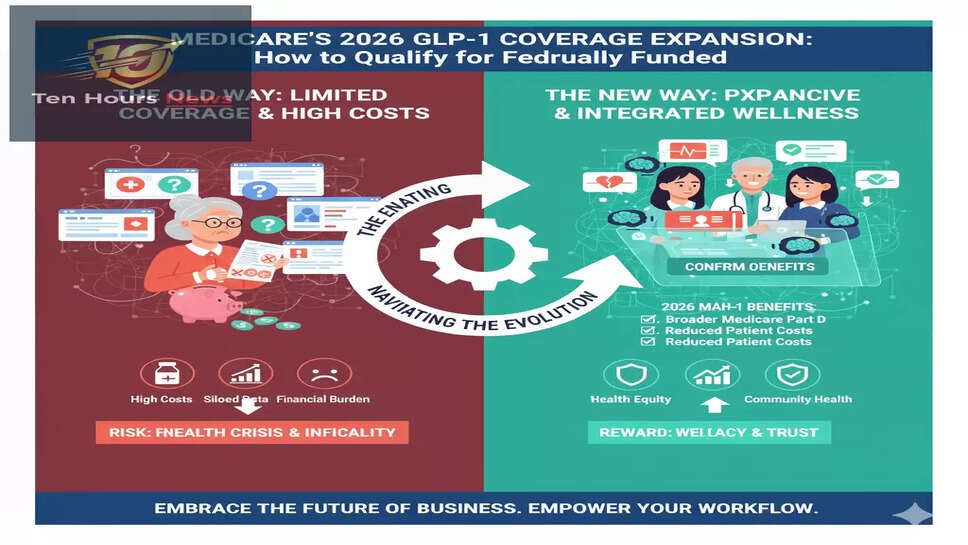
The landscape of American healthcare is shifting as we enter 2026, particularly for the millions of seniors relying on Medicare for chronic disease management. For years, Medicare was prohibited by a decades-old statute from covering medications prescribed solely for weight loss. However, the January 2026 Medicare GLP-1 Coverage Expansion has effectively dismantled this barrier. Driven by a historic agreement between the Trump administration and pharmaceutical giants Eli Lilly and Novo Nordisk, Medicare has launched a massive pilot program to provide federally funded access to "blockbuster" GLP-1 drugs like Wegovy, Zepbound, and Ozempic. This expansion, formalized under the regulatory flexibility of the One Big Beautiful Bill (OBBB) Act, aims to tackle the obesity epidemic at its root, recognizing that weight management is the primary preventative measure for heart disease, stroke, and diabetes. As of mid-2026, eligible beneficiaries can access these injectable and oral medications for a fraction of their previous retail cost, with the federal government stepping in to subsidize the monthly "carry cost" for those with the highest metabolic risks.
The 2026 "GENEROUS" Model: Qualifying Criteria
The centerpiece of the 2026 expansion is the GENEROUS (Guaranteed Expansion for Nutrition and Enhanced Risk Outcomes Under Supervision) Model. This program outlines specific clinical tiers that determine who qualifies for coverage under Medicare Part D. Unlike the "wild west" of early 2024, where coverage was inconsistent, the 2026 rules provide a standardized roadmap based on Body Mass Index (BMI) and comorbid conditions. To qualify for federally funded GLP-1s in 2026, a beneficiary must fall into one of three primary eligibility phases:
-
Phase 1 (Metabolic Risk): Individuals with a BMI of 27 or higher who also have a secondary diagnosis of prediabetes, established cardiovascular disease, or a history of stroke.
-
Phase 2 (Chronic Comorbidity): Individuals with a BMI of 30 or higher who suffer from uncontrolled hypertension, advanced chronic kidney disease, or heart failure.
-
Phase 3 (Severe Obesity): Any individual with a BMI of 35 or higher, regardless of secondary conditions. It is important to note that Medicare still does not cover "lifestyle" weight loss for those with a BMI under 27 or those without a documented metabolic risk. The goal of the 2026 expansion is specifically focused on "High-Need" beneficiaries where weight loss is medically necessary to prevent catastrophic health events.
The $50 Copay Cap and Federal Subsidies
The most significant financial relief for seniors in 2026 is the newly established Copay Cap. Under the agreement reached in late 2025, the monthly price for brand-name GLP-1 injections (Ozempic, Wegovy, Mounjaro, and Zepbound) has been set at a flat federal rate of $245 per month. For the Medicare beneficiary, the out-of-pocket burden is capped even further. Those enrolled in a participating Part D plan will pay a maximum copayment of $50 per month for their GLP-1 prescription. The federal government, through OBBB-authorized funding reallocations, covers the remaining $195 of the negotiated price. This represents a staggering reduction from the $900 to $1,300 monthly costs seen in previous years. Furthermore, these costs count toward the 2026 Medicare Part D out-of-pocket cap, which is indexed at $2,100 for the year. Once a senior hits this cap, their GLP-1 medications—and all other covered Part D drugs—are provided at $0 for the remainder of the calendar year.
TrumpRx: The Direct-to-Consumer "Bridge" Platform
For individuals who do not meet the strict Medicare BMI requirements or those in the "coverage gap" before the pilot program fully matures in July 2026, the administration has launched TrumpRx.gov. This platform acts as a direct-to-consumer bridge, bypassing traditional pharmacy benefit managers (PBMs) to offer manufacturer-direct pricing. In 2026, TrumpRx offers GLP-1 injections at a cash price of approximately $350 per month. While this is higher than the $50 Medicare copay, it provides a vital alternative for those paying out-of-pocket. Additionally, 2026 marks the arrival of the first FDA-approved oral GLP-1 pills for weight management. These daily pills are anticipated to start as low as $150 per month on the TrumpRx platform, offering a more affordable and less invasive option for those who prefer tablets over weekly injections. The OBBB Act facilitated this by offering "Most-Favored Nation" (MFN) status to manufacturers who list their products on the platform, ensuring U.S. prices align more closely with international benchmarks.
The "BALANCE" Model and Mandatory Lifestyle Support
Federal funding for GLP-1s in 2026 comes with a new requirement: the BALANCE (Better Approaches to Lifestyle and Nutrition for Comprehensive hEalth) Model. CMS (Centers for Medicare & Medicaid Services) has mandated that all beneficiaries receiving covered weight-loss medications must also be enrolled in a "Lifestyle Support Program." This program is provided by the drug manufacturers at no additional cost to the patient. It includes:
-
Digital Health Coaching: Access to a 24/7 autonomous "Silicon Coach" (Agentic AI) that tracks nutrition and activity levels.
-
Metabolic Monitoring: Integration with wearable devices to monitor blood glucose and heart rate variability.
-
Nutritional Education: Guidance that aligns with the 2026 MAHA Reset, focusing on high-protein intake and the avoidance of industrial seed oils and added sugars. The philosophy behind the 2026 expansion is that GLP-1s are a "tool," not a "cure." By pairing the medication with mandatory lifestyle interventions, the federal government aims to ensure that weight loss is sustainable, eventually allowing patients to taper off the drugs once metabolic health is restored.
2026 Medicaid Integration and State Opt-ins
The OBBB Act’s influence extends beyond Medicare and into the state-run Medicaid programs. As of early 2026, 32 states have issued "Letters of Intent" to join the federal GLP-1 pricing agreement. Under this model, Medicaid beneficiaries in participating states can access the $245 monthly pricing, with state-specific copays often ranging from $0 to $15. This is a critical development for health equity, as obesity disproportionately affects lower-income populations who previously had no path to affordable GLP-1 treatment. The OBBB Act provides a federal match for these costs, incentivizing states to "opt in" by demonstrating that the long-term savings from reduced dialysis, heart surgeries, and hospital stays will far outweigh the initial cost of the medication. For residents in non-expansion states, the TrumpRx platform remains the primary fallback for affordable access.
Conclusion
The 2026 expansion of Medicare coverage for GLP-1 medications represents a historic pivot in American public health policy. By leveraging the OBBB Act to negotiate lower prices and establishing clear qualification tiers through the GENEROUS Model, the federal government has made life-altering treatments accessible to the average senior for a $50 monthly copay. The transition from the "exclusion era" to the "expansion era" reflects a data-driven understanding that treating obesity is the most effective way to lower the overall cost of the Medicare program. As the TrumpRx platform scales and the BALANCE lifestyle programs begin to show results, 2026 will likely be remembered as the year the "Metabolic Reset" of America truly began. Whether through a weekly injection or the new 2026 oral pills, the path to federally funded weight loss is now open for those who meet the criteria, promising a leaner, healthier, and more fiscally sustainable future for the nation's seniors.
FAQs
What is the minimum BMI to qualify for Medicare GLP-1 coverage in 2026?
The minimum BMI is 27 if you have a related condition like prediabetes or heart disease. If you have no other health conditions, you generally need a BMI of 35 or higher to qualify.
How much will I pay for Wegovy or Ozempic under Medicare Part D?
Most eligible beneficiaries will pay a $50 monthly copay. The total out-of-pocket costs are capped at $2,100 for the 2026 calendar year across all your Part D medications.
What is TrumpRx and how does it help with GLP-1 costs?
TrumpRx.gov is a direct-to-consumer platform launched in 2026 that allows patients to buy GLP-1s at a discounted cash price (approx. $350) without needing a traditional insurance middleman.
Do the 2026 rules cover the new GLP-1 weight loss pills?
Yes. The 2026 expansion includes both injectable forms and newly FDA-approved oral GLP-1 pills, which are often priced lower than the injectable versions on the TrumpRx platform.
Will my state Medicaid cover these drugs in 2026?
Coverage depends on your state. Over 30 states have opted into the federal pricing agreement as of early 2026. Check with your local Medicaid office or the TrumpRx portal for your state's status.