
The Strait of Hormuz Energy Knife-Edge: The $126 Oil Reality of May 2026
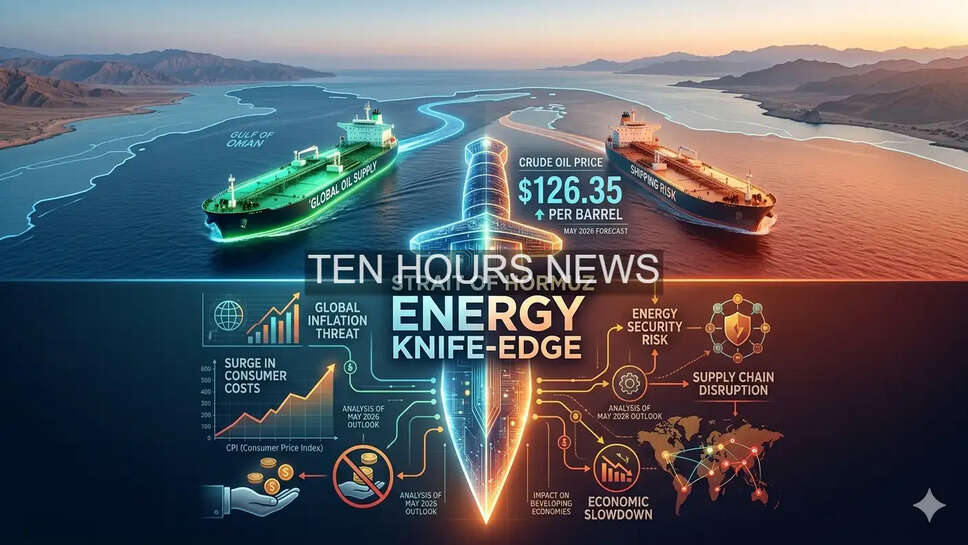
The global economy is currently walking a perilous tightrope as the Strait of Hormuz crisis reaches a fever pitch in May 2026. What began as a series of military skirmishes in late February has evolved into the most significant energy supply disruption in modern history. With Brent crude oil prices peaking at $126 per barrel this month—marking the largest monthly increase ever recorded—the "energy knife-edge" is no longer a theoretical risk; it is a full-blown economic emergency.
The Strait, a vital artery through which 20% of the world’s oil and liquefied natural gas (LNG) flows, remains "effectively closed" due to high insurance risks and direct military threats. This maritime blockade has not only stranded energy exports but has also triggered a systemic collapse of trade models for Gulf Cooperation Council (GCC) states. For the rest of the world, the $126 price tag at the pump is just the beginning of a cascading inflationary wave.
The "Effective Closure" and Global Supply Plunge
The 2026 crisis is defined by a 10.1 million barrel-per-day drop in global oil supply. While Iran has not declared a formal blockade, the IRGC's active targeting of tankers has made the route uninsurable for commercial fleets.
-
Stranded Supply: Approximately 20% of global oil and 17% of Qatar’s LNG production capacity are currently offline or inaccessible.
-
Inventory Depletion: Importing nations in Asia—specifically China, India, Japan, and South Korea—have been forced to tap into strategic reserves, which plummeted by 85 million barrels in March alone.
-
The LNG Shock: Following strikes on Qatar’s Ras Laffan complex, Asian LNG spot prices have surged by over 140%, threatening industrial output and power grid stability across the Pacific.
Economic Forecast: The Inflation Transmission Problem
Economists are warning of a "structural challenge" that interest rate hikes cannot easily solve. Sustained $100+ oil prices typically pass through to the Consumer Price Index (CPI) within six to twelve weeks, affecting everything from logistics to the price of milk.
| Metric | Pre-Crisis (Jan 2026) | Crisis Peak (May 2026) |
| Brent Crude Price | $78 / Barrel. | $126 / Barrel. |
| U.S. Gas Price Avg. | $3.15 / Gallon. | $4.10 / Gallon. |
| Asian LNG Spot Price | $12 / MMBtu. | $29+ / MMBtu. |
| Global Shipping Insurance | Standard Risk. | High-Risk (Prohibitive). |
| Stagflation Risk | Moderate. | High (Acute). |
The "Grocery Emergency" and Consumer Fallout
The crisis has moved beyond the gas station and into the supermarket. Because GCC states rely on the Strait for over 80% of their food imports, a "grocery supply emergency" has seen staples like grain and dairy prices jump by 40% to 120%.
In Europe, the situation is equally dire. Historically low gas storage levels—at just 30% capacity following a harsh winter—have caused heating costs to double. The European Central Bank (ECB) has been forced to postpone planned interest rate cuts, prioritizing the fight against energy-driven inflation even at the cost of a looming technical recession.
Conclusion
The Strait of Hormuz Energy Knife-Edge of May 2026 is the "greatest global energy security challenge in history," according to the IEA. While equity markets have shown strange resilience due to AI-driven tech earnings, the real-world impact on consumers is devastating. From $4.00-per-gallon gas in the U.S. to the collapse of the Gulf’s economic model, the $126 oil peak is a sobering reminder of how fragile the global supply chain remains. As ceasefire negotiations remain intractable, the world prepares for a summer defined by "Metabolic Joy" at home—because the cost of moving anywhere else has become too high to bear.
FAQs
Why is oil $126 per barrel in May 2026?
A combination of military conflict in the Persian Gulf and the effective closure of the Strait of Hormuz has removed 20% of the world's oil supply from the market, creating an unprecedented shortage.
Is the Strait of Hormuz actually blocked?
Legally, no. However, military threats and the removal of "war risk" insurance for vessels mean that ship owners cannot safely navigate the route, making it effectively closed to traffic.
How does this affect food prices?
High oil prices increase the cost of fertilizers and transportation. Furthermore, the blockade has disrupted 70% of food imports to Gulf nations, leading to global panic buying and price spikes of up to 120%.
What is the impact on interest rates?
Central banks like the ECB and the Fed are being forced to maintain high interest rates to combat energy-driven inflation, despite the risk of triggering a recession.
Will gas prices keep rising?
If the blockade persists, analysts fear oil could hit $150 per barrel, potentially pushing U.S. gas prices toward $5.00 per gallon by mid-summer.
Who is most affected by the LNG shortage?
Asian economies (China, Japan, South Korea) and Europe are hit hardest, as they rely heavily on Qatari LNG which transits the Strait.