
The Low-Cost Void: Navigating Travel Finance After the Spirit Airlines Collapse
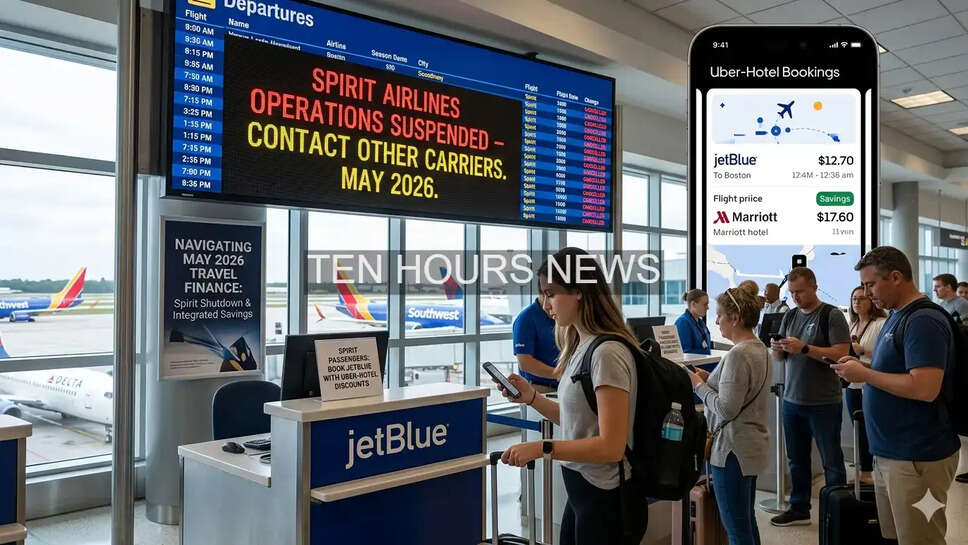
The travel landscape of May 2026 has been permanently altered by the sudden liquidation of Spirit Airlines. On May 2, 2026, the ultra-low-cost carrier (ULCC) officially ceased all operations after a failed $500 million government bailout and soaring jet fuel costs. The collapse has left a massive void in the budget travel sector, effectively ending the "Spirit Effect"—the historical trend where Spirit’s presence in a market forced legacy carriers to lower their prices. As a result, domestic airfares have spiked, forcing travelers to seek new financial strategies to keep their trips affordable.
In the wake of this collapse, the travel finance conversation has shifted from "finding the cheapest flight" to "maximizing ecosystem savings." The breakout trend of May 2026 is the "Uber-Hotel" integrated booking model. With Uber’s recent partnership with Expedia, the ride-hailing giant has transformed into a "travel super-app," offering deep discounts for users who bundle their transportation and lodging within a single financial ecosystem. For the budget-conscious traveler orphaned by Spirit, these integrated credits are becoming the primary way to offset the rising cost of airfare.
The New Pillars of Travel Finance
As we navigate the post-Spirit economy, three specific trends are defining how travelers manage their budgets:
-
Ecosystem Loyalty (Uber One): In May 2026, Uber One members are receiving 20% discounts on select hotels and 10% back in Uber Credits. This "closed-loop" finance system allows travelers to earn credits on their hotel stay that immediately pay for their airport transfers, bypassing the need for traditional car rentals.
-
Rescue Fare Arbitrage: Following the shutdown, carriers like JetBlue, Delta, and Southwest launched "rescue fares" for stranded Spirit passengers. Smart travelers are currently leveraging these temporary price caps and "trip interruption" insurance claims to reallocate their travel funds into higher-quality lodging.
-
The AI Concierge Advantage: Uber’s new AI-powered voice booking and "Travel Mode" act as a financial advisor, curating dining and transport options that fit a specific budget profile, helping users avoid the "hidden fees" that used to be associated with budget airlines.
Travel Budget Comparison: 2024 vs. 2026
| Expense Category | The ULCC Era (2024) | The Integrated Era (May 2026) |
| Airfare | $150 (Unbundled/Spirit). | $280 (Legacy + Rescue Fares). |
| Ground Transport | $60 (Separate Uber/Lyft). | $0 (Paid via Hotel Booking Credits). |
| Lodging | $400 (Direct Booking). | $320 (Uber-Expedia 20% Discount). |
| Booking Method | Multi-tab price hunting. | Single Super-App Integration. |
| Financial Strategy | Minimizing "Base Fare." | Maximizing Ecosystem "Cash Back." |
The Rise of "Uber-Hotel" Logic
The transition to integrated booking is more than a convenience; it’s a survival tactic in a high-inflation travel year.
-
"Eats for the Way" Efficiency: The new 2026 feature allowing riders to pre-order snacks or meals during their premium rides is reducing incidental airport spending—a major "leak" in travel budgets.
-
Unified Search Power: By spanning rides, food, and 700,000+ hotels, the Uber interface allows travelers to see the total cost of a trip before booking, a transparency that was often missing in the era of hidden airline baggage fees.
-
The International Shift: As of June 2026, Uber One benefits will apply globally, allowing American travelers to earn credits in London or Tokyo that can be spent on domestic rides back home, creating a global "travel currency."
Conclusion
The Post-Spirit Airlines Collapse marks the end of an era for "bottom-dollar" airfare, but the rise of integrated booking offers a more sophisticated way to save. As we move through the 2026 summer season, the "Uber-Hotel" model is proving that while flights may be more expensive, the entire trip can be cheaper if managed through a unified ecosystem. The savvy traveler of May 2026 is no longer looking for a $40 flight; they are looking for the 20% hotel rebate that pays for their entire ground commute. In this new landscape, convenience is the ultimate discount.
FAQs
Why did Spirit Airlines collapse in May 2026?
A combination of doubled jet fuel costs and the failure of a $500 million government bailout led to an immediate shutdown of all operations on May 2, 2026.
What are "rescue fares"?
These are capped, low-cost tickets offered by airlines like United, Delta, and JetBlue to assist travelers who were stranded by the Spirit Airlines shutdown.
How does the "Uber-Hotel" booking save money?
Through a partnership with Expedia, Uber users can book hotels directly in the app. Uber One members get up to 20% off and 10% back in Uber Credits to use on future rides or food.
What is Uber's "Travel Mode"?
Launched in 2026, this feature provides curated recommendations for dining, local attractions, and even "room service" delivered to your hotel door via Uber Eats.
Can I still get cheap flights in 2026?
While the loss of Spirit has raised average prices, using "Unified Search" tools and booking through super-apps often reveals bundled savings that aren't available on individual airline sites.
What should I do if I had a Spirit flight booked?
Check with competing airlines for rescue portals, contact your credit card company for a "service not rendered" chargeback, and look into your travel insurance for "trip interruption" coverage.