
Stablecoin Settlement 2.0: Why Global Corporations are Adopting USDC and USDT for Instant 2026 Cross-Border Treasury Management
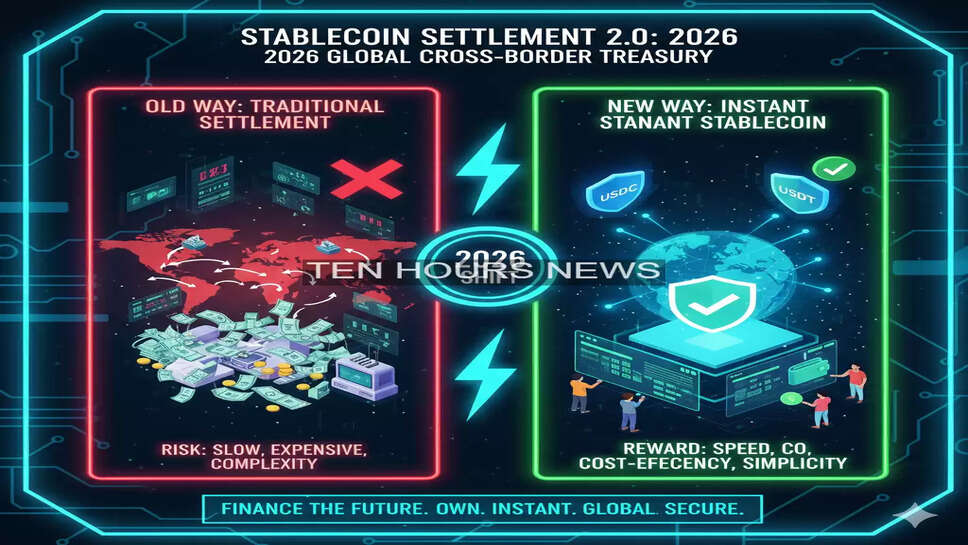
By early 2026, the "wait-and-see" period for corporate stablecoin adoption has ended. According to the Rapyd 2026 State of Stablecoins Report, nearly 64% of global businesses now use or plan to use stablecoins for core operations within the next three years. This shift marks the transition to Settlement 2.0—a world where capital is "always on." Whether it's a mid-sized European manufacturer paying a supplier in Vietnam or a Silicon Valley tech giant managing inter-company transfers, the move to digital dollars is saving enterprises up to 60% in transaction fees while reclaiming millions in "trapped" working capital that previously languished in the slow-moving pipes of correspondent banking.
The 2026 Regulatory Catalyst: GENIUS and MiCA
The primary hurdle to corporate adoption—legal uncertainty—was cleared in late 2025.
-
The U.S. GENIUS Act (2025): This landmark legislation established a federal framework for "Permitted Payment Stablecoin Issuers" (PPSIs). It mandated 1:1 reserve backing with high-quality liquid assets (like U.S. T-Bills) and provided a clear "Green Light" for U.S. corporations to hold USDC on their balance sheets as a cash equivalent.
-
EU MiCA Implementation: In Europe, the Markets in Crypto-Assets (MiCA) regulation reached full enforcement, providing a unified "Passport" for stablecoins like EURC and USDC across the entire Eurozone.
With these laws in place, the "Compliance Moat" has replaced the "Tech Hype." In 2026, CFOs are comfortable using stablecoins because the issuers are now audited with the same rigor as traditional banks.
USDC vs. USDT: The 2026 Corporate Divide
In 2026, the two giants of the industry have settled into distinct roles within the corporate ecosystem:
| Feature | USDC (Circle) | USDT (Tether) |
| Market Role | The "Regulated Standard" for Western Enterprises. | The "Liquidity Engine" for Global Trade and Emerging Markets. |
| Governance | Fully U.S.-regulated; Circle's 2026 IPO has brought unprecedented transparency. | Offshore-based (BVI/Bahamas); massive $150B+ liquidity pool. |
| Primary Use | B2B Invoices, Payroll, and Tier-1 Institutional Treasury. | High-volume cross-border trade in Asia, LATAM, and Africa. |
| Trust Factor | High compliance; daily reserve snapshots. | Deepest liquidity; vital for areas with restricted dollar access. |
While Circle’s USDC has seen a 73% growth in 2025 due to its "compliance-first" approach, Tether’s USDT remains the most used stablecoin globally, particularly in jurisdictions where the traditional banking system is fragmented or unreliable.
The ROI of "Always-On" Treasury
Corporate treasurers in 2026 are leveraging "Settlement 2.0" to gain a competitive edge through three key pillars:
-
Instant Working Capital: In traditional finance, "Friday afternoon" is a dead zone for payments. In 2026, stablecoin rails are 24/7/365. A company can settle a multi-million dollar invoice on a Sunday evening, allowing the recipient to deploy those funds immediately on Monday morning.
-
Programmable Treasury (Smart Contracts): Large firms are using "Escrow Agents" (automated smart contracts) to execute payments only when specific conditions are met—such as a bill of lading being uploaded or a quality check being passed—drastically reducing the need for manual reconciliation.
-
Inflation Protection for Global Talent: With remote work now global, many 2026 firms offer Stablecoin Payroll. Employees in high-inflation regions (like parts of Africa or South America) can choose to receive their salary in USD-pegged tokens, protecting their purchasing power from local currency devaluation.
[Image: A comparison chart: "Old School Treasury" (3-5 Days, $50+ Fees, 9-5 Hours, Opaque) vs. "2026 Stablecoin Treasury" (Seconds, <$1 Fees, 24/7 Access, On-Chain Traceable).]
Conclusion
In 2026, the "Internet of Value" has finally caught up to the "Internet of Information." Global corporations are no longer asking if they should use stablecoins, but which stablecoin best fits their regional and regulatory needs. As Circle prepares to integrate its rails directly into the core ERP systems of the Fortune 500 and Tether expands its role as the world's largest non-state holder of U.S. Treasuries, the financial world has permanently changed. Settlement 2.0 isn't just about speed; it's about the total modernization of how value moves across the globe.
FAQs
Is it legal for my company to hold USDC in 2026?
Yes, in most major jurisdictions. The U.S. GENIUS Act and the EU's MiCA framework have provided the necessary legal structures to treat regulated stablecoins as business assets.
How do we handle the "off-ramp" back to fiat currency?
Major banks (like JPMorgan and Lloyds) now offer "Digital Wallets" that sit alongside traditional accounts, allowing for near-instant conversion between stablecoins and traditional bank deposits.
Are stablecoins actually "Stable" in 2026?
Regulated stablecoins like USDC are required to maintain 1-to-1 backing with cash and short-term Treasuries, which are audited monthly (and sometimes daily) to ensure the peg remains secure.
What is the "Clarity Act" being discussed in 2026?
The Clarity Act is a proposed follow-up to the GENIUS Act aimed at standardizing how digital assets are classified on corporate balance sheets, potentially allowing them to be listed as "Cash Equivalents" for accounting purposes.
Why would a company use USDT if USDC is more regulated?
Liquidity. In many parts of the world, USDT has deeper trading pairs and is more widely accepted by local merchants and distributors than any other digital asset.