
The White House Lockdown Incident: A Security Deep Dive
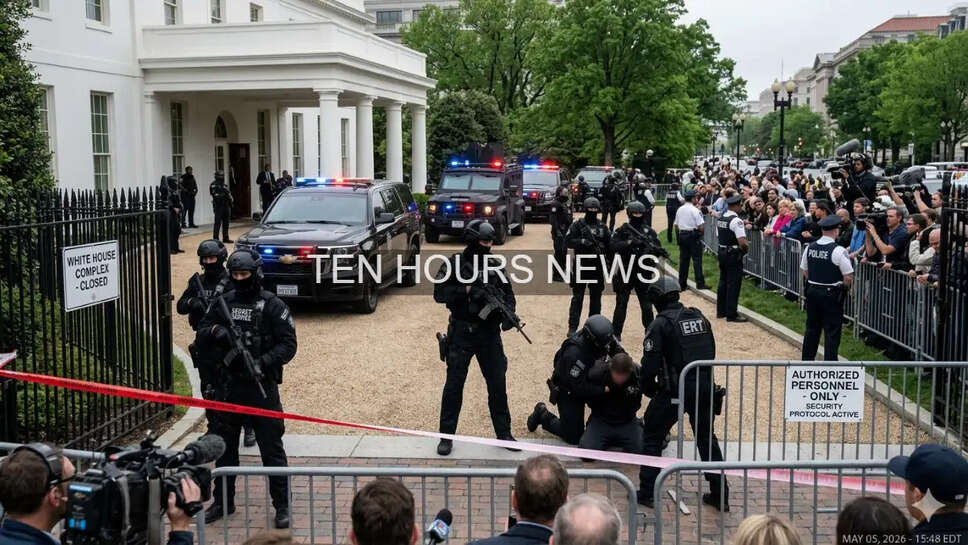
Washington, D.C. entered a state of high alert on May 4 and 5, 2026, following a violent confrontation between the U.S. Secret Service (USSS) and an armed individual just south of the White House complex. The incident, which triggered an immediate lockdown of the executive mansion and the evacuation of the North Lawn, serves as a grim case study for the heightened security landscape of 2026. Coming just ten days after an assassination attempt on President Donald Trump at the White House Correspondents' Dinner, this latest breach has forced federal law enforcement to transition from "Passive Protection" to an "Active Perimeter" model.
The suspect, identified as Michael Marx, a 45-year-old Texas resident, was first spotted by plainclothes Secret Service agents near the intersection of 15th Street SW and Independence Avenue around 3:30 p.m. Agents utilized 2026 Visual Threat Assessment (VTA) protocols—identifying a "visual print" of a firearm through the suspect's clothing—before attempting to intervene. The situation turned lethal when Marx fled on foot and opened fire on pursuing officers, striking a 15-year-old bystander before being neutralized by Secret Service return fire. While President Trump continued a small-business summit in the East Room uninterrupted, the tactical response outside signaled a significant hardening of the capital’s "Green Zone."
2026 Security Protocols: The "Active Perimeter" Strategy
The May 5th investigative report highlights several key shifts in D.C. protective operations that defined the response:
-
Pre-Emptive Perimeter Detection: Unlike previous years where interventions occurred at physical gates, the 2026 protocol emphasizes the "Expanded Buffer." Plainclothes agents now patrol several blocks beyond the White House fence, using advanced behavioral analytics and gait-detection technology to identify suspicious individuals before they reach a hardening point.
-
The "Shadow" Response: The response to Michael Marx involved a rapid-deployment force of National Guard and USSS tactical units that were already positioned in the National Mall area due to the "Code Orange" threat level established after the April 25th Washington Hilton shooting.
-
Integrated Lockdown Automation: Once shots were fired, the White House shifted to a "Digital Shield" status. This 2026 protocol automatically secures all electronic access points and initiates "Media Isolation," moving journalists into the Press Briefing Room within 90 seconds.
Incident Comparison: The Security Escalation of 2026
| Feature | White House Correspondents' Dinner (April 25) | White House Perimeter Shooting (May 4-5) |
| Suspect | Cole Tomas Allen (31, CA). | Michael Marx (45, TX). |
| Breach Point | Hotel Magnetometer / Internal Perimeter. | External Public Space (National Mall). |
| Response Time | Seconds (Active Shooter in Ballroom). | Proactive (Spotted by Plainclothes). |
| Result | One agent injured; event canceled. | Suspect neutralized; minor bystander hit. |
| Protocol Failure | Soft Building Perimeter. | N/A (Success in Detection). |
The "Targeted Administration" Threat Matrix
The Secret Service is currently investigating whether the May 5th incident was coordinated with the previous week's attack.
-
The "Lone Wolf" Surge: Investigators are reviewing Marx’s digital footprint to see if he was inspired by the "Apology and Explanation" manifesto released by Cole Tomas Allen. In 2026, "copycat contagion" has become the USSS’s primary intelligence concern.
-
Visual Print Identification: Deputy Director Matthew Quinn confirmed that agents are now trained to engage based on the "Visual Print" doctrine, allowing for quicker intervention when a weapon is concealed but identifiable through physical movement.
-
DOGE-Driven Security Review: Following the Department of Government Efficiency (DOGE) mandates, the Secret Service has redirected funds from administrative overhead into "Frontline Protective Intelligence," resulting in the higher density of plainclothes agents seen in this week’s encounter.
Conclusion
The May 5th White House Lockdown was a stark reminder that the "fortress mentality" of the 2020s has been replaced by a more mobile, aggressive security posture in 2026. While the Secret Service successfully prevented Michael Marx from reaching the White House fence, the frequency of these high-stakes encounters suggests a systemic shift in the threat environment. For the residents and tourists of Washington, D.C., the "new normal" of 2026 is a city where every street corner is a potential tactical zone. The "Active Perimeter" saved lives this week, but the persistent volatility of the capital suggests that the "Green Zone" may only grow larger in the months to come.
FAQs
What happened at the White House on May 5, 2026?
The White House was briefly locked down after Secret Service agents shot an armed suspect, Michael Marx, who opened fire on them near the National Mall.
Who is Michael Marx?
A 45-year-old man from Texas who was identified by plainclothes agents as carrying a firearm. He is currently hospitalized and facing multiple federal charges.
Was the President in danger?
President Trump was in the White House during the incident but was never in direct danger; his small-business summit continued without interruption.
What is a "Visual Print" in security terms?
It is a 2026 security standard where agents identify the physical outline or "imprint" of a weapon through clothing, allowing them to initiate an investigative stop before a weapon is drawn.
Was anyone else hurt?
A 15-year-old boy was grazed by a bullet during the exchange of fire. He was treated for non-life-threatening injuries and released.
Is this related to the White House Correspondents' Dinner shooting?
While both involve attempts on the administration, investigators have not yet confirmed a direct link between Michael Marx and the April 25th shooter, Cole Tomas Allen.