
The Great Wall Diplomatic Summit – Analyzing the Global Stakes of the U.S. President’s State Visit to Beijing on May 13, 2026
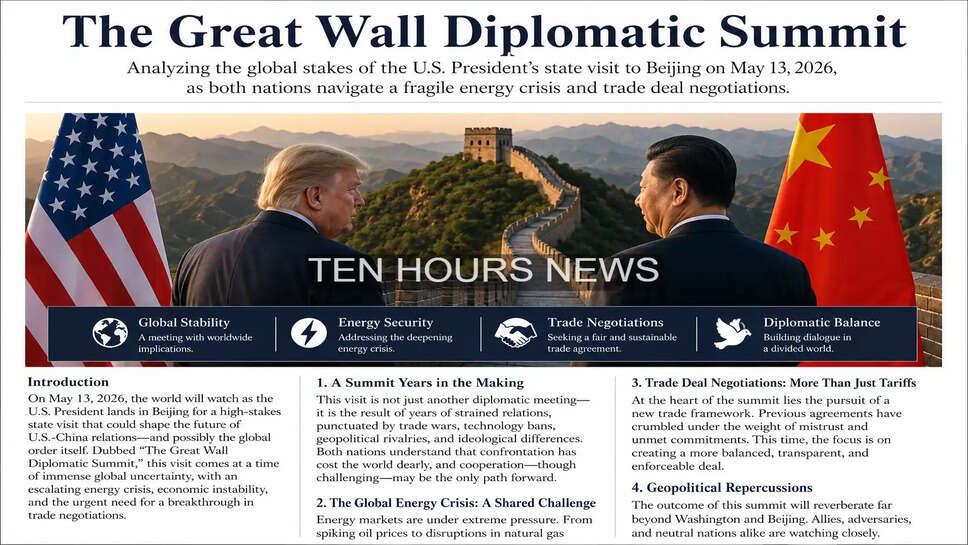
The Great Wall Diplomatic Summit has captured worldwide attention as the U.S. President arrives in Beijing on May 13, 2026, for one of the most significant state visits in modern diplomatic history. At a time when the world faces an unstable energy market, rising inflation, fragile supply chains, and renewed trade tensions, the meeting between Washington and Beijing carries enormous global consequences. Political analysts, economists, and energy experts are watching every development closely because the outcome of this summit could shape international markets and diplomatic strategies for years.
Why This State Visit Matters
Relations between the United States and China have experienced turbulence throughout the past decade. Trade disputes, technology restrictions, military competition, and disagreements over regional influence have created uncertainty in global politics. However, despite these tensions, both countries remain deeply interconnected economically. The United States depends heavily on Chinese manufacturing capabilities, while China relies on American markets and investment opportunities.
The May 2026 summit represents more than symbolic diplomacy. It is a high-stakes negotiation involving energy security, international trade, climate cooperation, and geopolitical stability. The world’s two largest economies understand that continued confrontation could trigger severe global economic consequences.
The Fragile Global Energy Crisis
One of the most urgent issues dominating the summit is the global energy crisis. Oil prices have remained volatile due to disruptions in shipping routes, reduced production capacity in several regions, and ongoing geopolitical conflicts affecting energy exports. European nations continue struggling with energy diversification efforts, while developing countries face rising fuel costs that threaten economic growth.
Both the United States and China are major energy consumers. Their decisions regarding strategic reserves, renewable investments, and international energy cooperation influence markets worldwide. During the Beijing summit, leaders are expected to discuss coordinated efforts to stabilize oil prices and strengthen clean energy partnerships.
China has rapidly expanded its renewable energy sector over the last several years, becoming a global leader in solar panel production and electric vehicle manufacturing. Meanwhile, the United States continues investing heavily in domestic energy production and green infrastructure projects. Cooperation between these two powers could accelerate technological innovation and improve energy stability globally.
Trade Negotiations at the Center of Attention
Trade remains another defining issue of the summit. Previous tariffs and restrictions imposed by both countries damaged supply chains and increased costs for businesses and consumers. Many multinational corporations experienced disruptions as tensions escalated between Washington and Beijing.
Current negotiations focus on reducing trade barriers, restoring confidence among investors, and improving market access. American officials seek stronger protections for intellectual property rights and fair competition policies, while Chinese leaders aim to ease export restrictions and strengthen international trade partnerships.
If successful, the negotiations could reduce uncertainty in global financial markets. Investors have already shown cautious optimism leading up to the summit, with stock markets responding positively to reports of constructive diplomatic engagement.
Technology and Strategic Competition
Technology competition also remains central to the discussions. Artificial intelligence, semiconductor production, cybersecurity, and telecommunications infrastructure have become critical areas of rivalry between the two nations.
The United States has introduced several restrictions targeting advanced chip exports and technology transfers to China. In response, China accelerated efforts to develop domestic semiconductor industries and reduce reliance on foreign suppliers.
Despite competition, experts argue that limited cooperation in technological standards and cybersecurity could prevent future conflicts. Establishing communication channels and regulatory frameworks may reduce risks associated with cyberattacks and digital espionage.
Climate Cooperation and Environmental Policy
Climate change is another major topic expected to dominate the summit agenda. Both nations are among the world’s largest carbon emitters, making their cooperation essential for meaningful environmental progress.
Global temperatures continue rising, and extreme weather events are becoming increasingly common. Floods, droughts, wildfires, and heatwaves have affected economies across continents. Environmental experts believe that collaboration between the United States and China could strengthen international climate agreements and encourage other countries to accelerate green energy transitions.
Joint commitments involving renewable technology sharing, carbon reduction targets, and sustainable infrastructure investments could become one of the summit’s most positive outcomes.
Economic Consequences for the World
The economic implications of the summit extend far beyond the United States and China. Countries across Asia, Europe, Africa, and Latin America closely depend on trade relationships with both powers. Any improvement or deterioration in diplomatic ties directly impacts global commerce.
Emerging economies are especially vulnerable to instability. Rising energy costs, fluctuating currency markets, and disrupted supply chains create economic pressure for governments already managing inflation and debt challenges.
A successful summit could restore confidence in international cooperation and reduce fears of a prolonged economic slowdown. Financial institutions and multinational corporations are hoping for agreements that support market stability and encourage investment growth.
Security Concerns and Regional Stability
Regional security remains another sensitive subject surrounding the Beijing visit. Tensions in the Indo-Pacific region, military activities near contested territories, and concerns regarding strategic alliances continue influencing diplomatic discussions.
Both governments recognize that direct military confrontation would carry catastrophic consequences. Diplomatic engagement provides an opportunity to manage disagreements peacefully while maintaining open communication channels.
Analysts believe the summit may lead to confidence-building measures involving military communication systems and crisis management protocols. Although major breakthroughs are unlikely, even modest progress could reduce geopolitical risks.
Media Attention and Global Public Reaction
International media coverage of the Great Wall Diplomatic Summit has been intense. News organizations around the world describe the event as a defining moment for global diplomacy in 2026.
Public opinion remains divided. Some observers view the summit as a genuine effort to improve relations and address shared challenges. Others remain skeptical, arguing that deep strategic competition between the two nations will continue regardless of temporary diplomatic gestures.
Social media discussions have also amplified global interest in the visit, with millions following updates related to speeches, trade announcements, and energy negotiations.
Conclusion
The Great Wall Diplomatic Summit represents far more than a ceremonial state visit. It is a crucial diplomatic moment that may influence global trade, energy security, climate policy, and international stability for years ahead. As the United States and China navigate complex negotiations during a fragile economic period, the world watches carefully for signs of cooperation or confrontation.
Although major differences remain between both nations, the Beijing summit demonstrates the importance of dialogue during uncertain times. Whether the meetings produce transformative agreements or modest diplomatic progress, the consequences will extend well beyond Washington and Beijing. In a deeply interconnected world, the success of this summit could help determine the direction of the global economy and international relations throughout the remainder of the decade.
FAQs
What is the Great Wall Diplomatic Summit?
It refers to the May 13, 2026 state visit by the U.S. President to Beijing for high-level diplomatic discussions with Chinese leaders.
Why is the summit important?
The summit addresses major global issues including trade negotiations, energy security, climate cooperation, and geopolitical stability.
How does the energy crisis affect the summit?
Rising global energy prices and supply disruptions make cooperation between the United States and China increasingly important.
What are the key trade issues being discussed?
Discussions include tariffs, supply chain stability, intellectual property protections, and market access.
Could the summit improve U.S.-China relations?
While deep disagreements remain, diplomatic engagement may reduce tensions and encourage future cooperation.