
The 2026 Hormuz Blockade: Silicon Diplomacy and the High-Stakes Maritime Standoff
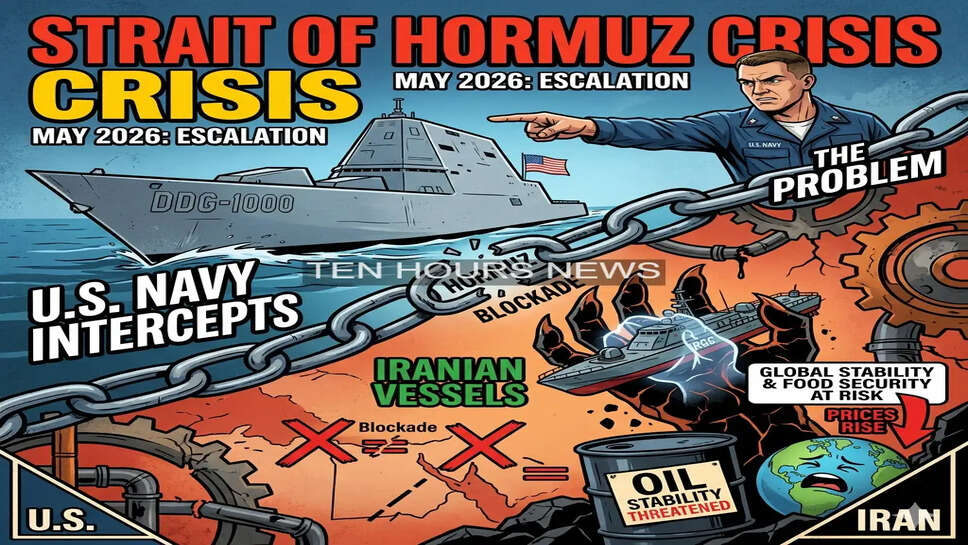
As of early May 2026, the Strait of Hormuz—the world’s most critical maritime chokepoint—has transitioned from a high-tension zone to the center of a potential global economic collapse. On May 4, the United States launched Operation Project Freedom, a high-stakes naval mission led by CENTCOM to escort stranded commercial vessels and break the effective blockade imposed by Iran. This move followed months of naval skirmishes that began in February 2026, leaving nearly 150 ships anchored in limbo and approximately 20,000 seafarers caught in the crossfire.
The crisis is now defined by a "dual blockade" dynamic. While the Iranian Revolutionary Guard (IRGC) has utilized mines, drones, and fast-attack boats to deny passage through the 21-mile-wide strait, the U.S. Navy has countered with a full maritime blockade of Iranian ports. This strategic standoff has effectively paralyzed a waterway that normally handles 25% of the world’s seaborne oil and 20% of its liquefied natural gas (LNG).
The Global Impact: Energy Volatility and the Fertilizer Crisis
The implications of the May escalation extend far beyond the Persian Gulf, striking at the heart of global survival:
-
Energy Market Shock: Following the launch of Project Freedom and subsequent naval engagements, Brent crude oil prices surged to $115–$120 per barrel. Markets are currently grappling with a permanent "geopolitical risk premium," as alternative pipelines lack the capacity to replace the millions of barrels lost daily.
-
The Food Security "Fertilizer Trap": The Gulf region is a primary supplier of hydrocarbon derivatives used in the Haber-Bosch process. The blockade has removed nearly 40% of the global nitrogen fertilizer supply from the market overnight. Consequently, urea prices have doubled during the critical spring planting window, leading to projected food price spikes of 30% in import-dependent regions like Zambia and Sri Lanka.
-
Maritime Deadlock: Insurance providers have withdrawn war-risk coverage for the strait, making commercial transit economically suicidal for most shipping firms. Despite U.S. efforts to provide a "security dome," only a handful of U.S.-flagged vessels have successfully transited, representing less than 5% of pre-crisis traffic levels.
Strategic Capability Overview: May 2026
| Feature | U.S. Navy (Project Freedom) | Iranian IRGC Forces |
| Active Force | 15,000 personnel, 100+ aircraft, Aegis destroyers. | Drones, GPS-linked sea mines, fast-attack craft. |
| Primary Objective | Restore transit for "neutral" stranded ships. | Enforce "New Management" rules of the Strait. |
| Tactical Approach | Mine clearance and armed convoy escorts. | Asymmetric strikes and maritime denial. |
| Economic Lever | Strict blockade of all Iranian port traffic. | Weaponization of global energy/fertilizer flows. |
| Status | Active engagements; clearing "High Risk" zones. | Controlling chokepoint via selective access. |
The Road Ahead: Escalation or Exhaustion?
By mid-May 2026, the international community remains at a crossroads.
-
The Selective Access Strategy: Iran has begun allowing limited passage to "friendly" nations—including China and India—turning the strait into a geopolitical filter rather than a sealed route.
-
Logistical Fragility: While the U.S. Treasury has attempted to calm markets, the physical reality of supply chain collapse is undeniable. Without a diplomatic breakthrough to replace the failed Islamabad Talks, the "dual blockade" is expected to remain the dominant force in the global economy through the summer.
-
Humanitarian Concerns: Global aid packages totaling over $100 billion have proven largely ineffective against the physical shortage of grain and agricultural inputs caused by the maritime halt.
Conclusion
The May 2026 Hormuz Blockade Crisis has revealed the terrifying fragility of modern maritime dependency. As U.S. destroyers and Iranian fast-boats engage in a dance of deterrence, the true victims are the global energy consumers and farmers facing unprecedented costs. The standoff is no longer just about regional hegemony; it is a battle for the lifelines of global food security and energy stability. In 2026, the world is learning that a 21-mile gap in the earth's crust can determine the survival of economies half a world away.
FAQs
What is the goal of Operation Project Freedom?
Launched in May 2026, it aims to provide U.S. military escorts for hundreds of stranded commercial ships to extract them from the high-risk zones of the Strait of Hormuz.
How has the crisis affected global fertilizer supplies?
Because the Gulf produces roughly 40% of the world's nitrogen fertilizers, the blockade has caused urea prices to double, threatening crop yields in Africa and Asia.
Is the U.S. Navy also blockading Iran?
Yes. Since mid-April 2026, the U.S. has enforced a blockade on all Iranian ports to prevent the regime from exporting oil while the strait remains closed to the international community.
What is the current price of oil?
As of May 5, 2026, Brent crude is trading between $113 and $117 per barrel, reflecting a significant geopolitical risk premium due to the conflict.
Why haven't more ships used the U.S. escorts?
Many shipping companies are reluctant due to the lack of war-risk insurance and the threat of Iranian GPS-linked sea mines, which remain a primary danger in the waterway.
What happened to the peace talks?
The "Islamabad Talks" collapsed in late April 2026 after both sides failed to reach an agreement on nuclear and maritime security, leading directly to the current military escalation.