
The 2026 Digital Identity Act: How New Hollywood Laws are Protecting AI Likeness Rights
Explore the 2026 Digital Identity Act and new California AI laws. Learn how AB 2602 and the No FAKES Act are protecting actor likeness rights and voice clones.
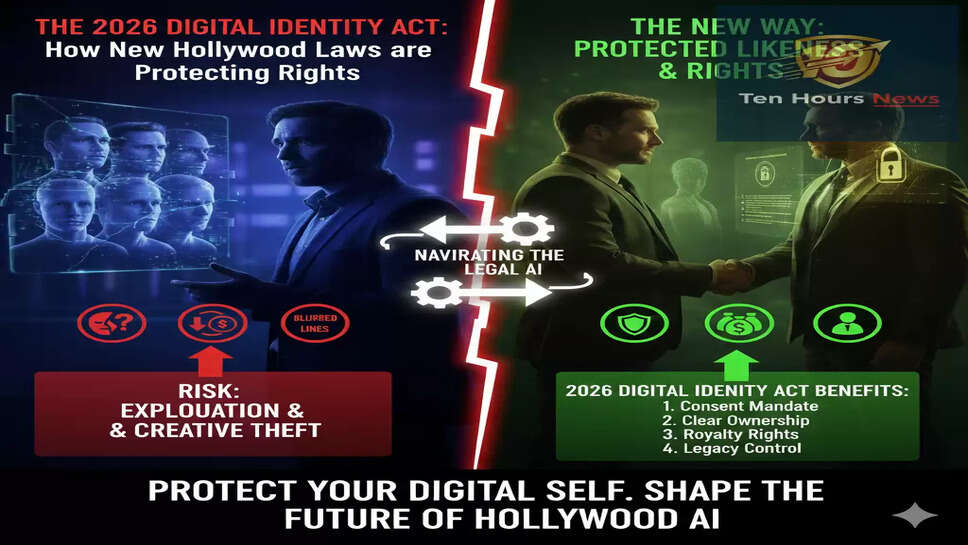
In January 2026, the entertainment industry reached a legal watershed with the full implementation of the Digital Identity Act (often discussed alongside federal "No FAKES" provisions) and a suite of California-specific laws that redefine human personhood in the age of artificial intelligence. For years, the rapid advancement of generative AI allowed for the creation of "digital twins"—hyper-realistic clones of an actor's voice and image—without standardized legal guardrails. However, as of January 1, 2026, the legal "wild west" of digital replication has been replaced by a rigorous framework of informed consent and intellectual property protection. These laws, catalyzed by the 2023–2024 strikes and finalized through the legislative momentum of the One Big Beautiful Bill (OBBB) Act, ensure that a performer’s likeness is treated as an inalienable asset. Whether it is a background actor being scanned for a blockbuster or a legendary singer’s voice being synthesized for a new track, the 2026 Digital Identity standards mandate that the "human-in-the-loop" retains ultimate control over their digital manifestation.
The Core of California AB 2602: Informed Consent Mandates
At the heart of the 2026 Hollywood legal landscape is California Assembly Bill 2602, which officially went into effect at the start of last year and reached full enforcement maturity this month. This law effectively bans the use of "vague" or "unconscionable" contract language that previously allowed studios to claim rights to an actor’s likeness "in all media now known or hereafter devised." Under the 2026 rules, a contract for a digital replica is only enforceable if it meets three strict criteria:
- Specific Description: The contract must state exactly how the digital replica will be used (e.g., for "stunt doubling in Scene 4" rather than "general production use").
- Legal Representation: The performer must have been represented by legal counsel or a labor union (such as SAG-AFTRA) during the negotiation of the replica rights.
- Economic Replacement Bar: The law prohibits the use of an AI replica if it is intended to replace work that the performer could have reasonably performed in person, protecting the labor market for human actors. This shift has forced a total "Contractual Reset" across Hollywood, where every digital scan now requires a separate, transparent rider that outlines the duration, scope, and compensation for the AI-generated performance.
The Federal "No FAKES" Act: A National Standard for Likeness
While California leads the way, the federal No FAKES (Nurturing Originals, Fostering Art, and Keeping Entertainment Safe) Act has established a nationwide baseline for 2026. This act creates a federal "right of publicity" that protects every American—not just celebrities—from unauthorized AI-generated replicas of their face or voice. The No FAKES Act is particularly significant for its impact on digital distribution platforms. In 2026, platforms like YouTube, TikTok, and Spotify are held legally liable if they knowingly host unauthorized "deepfake" performances. This has led to the development of the Digital Identity Clearinghouse, an OBBBA-supported database where performers can register their "Biometric Signature" to automatically flag and take down unauthorized clones. This federal intervention ensures that even if a performer is outside of California’s jurisdiction, their "vocal DNA" and visual identity cannot be monetized by third parties without a valid, time-limited license.
Post-Mortem Protections: AB 1836 and the Deceased Performer
A major concern addressed in the 2026 legal reset is the use of "Digital Resurrection." For decades, the likeness rights of deceased stars were a legal gray area, often exploited for commercials or film cameos without the family's true blessing. California AB 1836 has ended this practice by requiring explicit permission from a performer's estate before an AI replica can be used in a "new" performance. This law was famously influenced by the unauthorized AI recreation of late comedians and actors in early 2024. In 2026, any studio wishing to "cast" a deceased legend must negotiate with the heirs under terms that mimic a living actor's contract. This includes "Moral Rights" clauses that allow estates to veto the use of a replica in content that would have been inconsistent with the performer's living values. The OBBB Act facilitated this by standardizing the "Heritage Tax" on these digital royalties, ensuring that a portion of the revenue generated by deceased AI replicas goes toward supporting the National Endowment for the Arts (NEA) and living performer pension funds.
AI Transparency and the "Watermark" Requirement
Transparency is a key pillar of the 2026 Digital Identity Act. Under the California AI Transparency Act (SB 942), which reached its final compliance deadline in late 2025, any content featuring a digital replica must be clearly labeled for the consumer.
-
Invisible Watermarking: All AI-generated replicas must contain a cryptographically secure, invisible watermark that identifies the content as synthetic.
- Conspicuous Disclosure: For advertisements and promotional materials, a clear text disclosure (e.g., "Contains AI-generated Likeness") must be visible to the viewer. These transparency tools allow the public to distinguish between a "Real Food" human performance and a "Silicon Employee" recreation. For the audience of 2026, this labeling has become as standard as "Nutrition Facts" on a grocery item, providing the consumer with the agency to choose between authentic and synthetic entertainment.
Impact on Background Actors and "The Scan"
The 2026 laws have fundamentally changed the "Day Player" experience on film sets. In the past, background actors were often asked to step into a "Volumetric Capture" rig (a 3D scanning booth) for a one-time fee, only to find their digital likeness used in dozens of other projects without additional pay. The 2026 Digital Identity Act mandates "Per-Project Licensing" for background scans. If a background actor's digital double is used in a sequel or a different television series, the actor is entitled to a residual payment, just as if they had appeared in person. This has been a major victory for the lower-income tier of the entertainment industry, which was most at risk of "Digital Displacement." By decoupling the capture of the likeness from the right to use it, the law has ensured that the "Silicon Workforce" does not cannibalize the "Human Workforce."
Conclusion
The 2026 Digital Identity Act and its supporting California legislation represent a bold stand for human agency in a technological era. By codifying informed consent, protecting the deceased, and mandating transparency, these laws have ensured that Hollywood remains a place where "Real Talent" is valued over mere "Data Replicas." Backed by the fiscal and regulatory weight of the OBBB Act, the entertainment industry has successfully transitioned into a model where AI is a tool for creativity, not a tool for exploitation. As we celebrate the Sestercentennial in 2026, the protection of our "Digital Selves" stands as a modern extension of the foundational rights of life, liberty, and the pursuit of happiness. In the Hollywood of 2026, the "Silicon Employee" may be able to mimic the voice and face, but the law ensures that the heart, soul, and paycheck remain firmly with the human performer.
FAQs
What is the main purpose of California's AB 2602?
AB 2602 requires studios to obtain informed, specific consent before using a digital replica of an actor. It also prohibits vague contract language that would give studios broad, permanent rights to an actor's AI likeness.
Does the 2026 Digital Identity Act protect ordinary people or just celebrities?
While many provisions focus on performers, the federal "No FAKES" Act provides likeness and voice protection for all Americans, allowing anyone to take legal action against unauthorized AI clones of themselves.
Can a studio use an AI version of a dead actor in 2026?
Only with the explicit permission of the actor's estate. Under California AB 1836, the estate must give consent for "new" performances created via AI, and specific conditions and compensation must be met.
How do watermarks work in the new 2026 AI laws?
Law SB 942 requires AI developers and studios to include invisible, permanent digital markers in AI-generated content. These markers allow platforms and consumers to identify that the likeness is synthetic.
Can I opt-out of being scanned for an AI replica on a film set?
Yes. The 2026 laws ensure that performers cannot be coerced into signing away their digital rights as a condition of employment for in-person work, and any such contract signed without legal/union representation is often void.