Silicon Diplomacy: The 2026 US-India Fast-Track for AI and Quantum Elite
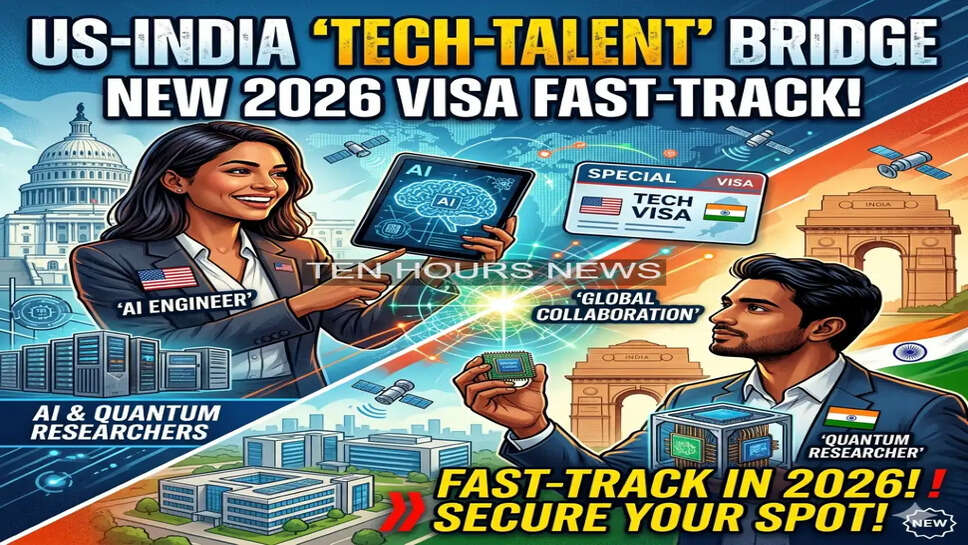
The strategic partnership between Washington and New Delhi has moved from high-level rhetoric to hard-wired policy with the official launch of the May 2026 Tech-Talent Bridge. Building on the foundations of the iCET (Initiative on Critical and Emerging Technology), this new fast-track program is specifically designed to bypass the traditional H-1B lottery bottlenecks for a select elite: AI engineers, quantum researchers, and semiconductor architects. In a 2026 landscape where "compute sovereignty" is the new national security, both nations have realized that the first country to secure the world's top 1% of brainpower wins the decade.
This "Bridge" is not just a visa update; it is a structural bypass. Under the new TRUST Initiative (Transforming the Relationship Utilizing Strategic Technologies), qualified Indian researchers moving to US national labs and Silicon Valley startups—and vice versa—can now secure work authorization in as little as 15 days. This move comes at a critical juncture as the US faces a bipartisan push for the "End H-1B Visa Abuse Act," which threatens to freeze traditional talent pipelines. By carving out a protected "fast-track" for deep-tech domains, the two democracies are ensuring that the physical backbone of AI—from chips to foundational models—remains a collaborative, bilateral asset.
Inside the 2026 Tech-Talent Fast-Track
The May 2026 program introduces three specific mechanisms to accelerate the flow of high-level expertise:
-
Priority NPU/Quantum Certification: Applicants with a background in Neural Processing Unit (NPU) design or Post-Quantum Cryptography (PQC) receive immediate "Specialist Status," exempting them from annual visa caps.
-
The "Dual-Base" Residency: A unique 2026 provision allows researchers to maintain residency in both nations simultaneously, facilitating fluid movement between US research hubs and India’s new "Telangana AI Innovation Hub."
-
Pre-Verified Corporate Pools: Major tech giants and accredited research universities have been granted "Verified Sponsor" status, allowing them to bypass the labor certification process for AI roles that have been pre-identified as "Critical Shortage" domains.
2026 Talent Comparison: Traditional Visas vs. Tech-Talent Bridge
| Feature | Traditional H-1B (Legacy) | 2026 Tech-Talent Bridge |
| Processing Time | 6–12 Months. | 15 Days (Accelerated). |
| Annual Quota | Strict 65,000 Cap. | Cap-Exempt for Deep-Tech. |
| Field Restriction | General STEM. | AI, Quantum, & Semiconductors Only. |
| Spousal Support | H-4 (Delayed Work Auth). | Immediate Spousal Work Rights. |
| Minimum Salary | Variable / Proposed $200k. | Performance-Based / Grant-Linked. |
The Geopolitical Stakes: Beyond the Visa
The 2026 Talent Bridge is the human component of the Pax Silica Declaration, a bilateral agreement to build a "trusted technology stack" independent of global competitors.
-
AI Labor-Market Mapping: For the first time, the US Department of Labor and India’s MeitY are conducting real-time "Labor Mapping" to identify exactly where skills are needed—be it AI-driven healthcare in rural India or semiconductor fabrication in Arizona.
-
Binational Apprenticeship Networks: The bridge is also funding 2026 "Quantum Fellowships," where PhD students split their time between IITs and Ivy League labs, ensuring that the next generation of researchers is natively collaborative.
-
The Export-Import Buffer: By fast-tracking talent, the US is essentially "exporting" its R&D leadership while "importing" India's unmatched scale and digital public infrastructure capacity. This creates a "Full-Stack" partnership that neither nation could achieve in isolation.
Conclusion
The May 2026 Tech-Talent Bridge is the ultimate admission that in the age of Artificial Intelligence, human capital is the most valuable currency. By stripping away the bureaucratic friction that has traditionally stalled the US-India relationship, both nations are securing a future where innovation isn't hampered by an immigration lawyer’s backlog. As the "End H-1B Abuse" debate rages in the background, this specialized bridge stands as a blueprint for how democracies can protect their interests while remaining open to the world's brightest minds. In 2026, the most important border isn't the one on a map—it’s the one between a breakthrough and the talent required to build it.
FAQs
What is the Tech-Talent Bridge?
It is a May 2026 visa fast-track program between the US and India designed to move AI and quantum researchers between the two countries in record time.
Who is eligible for the 15-day processing?
Eligibility is currently restricted to specialists in AI modeling, quantum computing, semiconductor design, and cyber security with a verified job offer or research grant.
How does this bypass the H-1B lottery?
The program uses a "National Interest" exemption for critical technologies, meaning qualified applicants do not have to compete in the general lottery pool.
Does it help Indian researchers only?
No. It is a two-way bridge designed to also help American researchers and venture capitalists move to India’s growing tech hubs like Bengaluru and Telangana.
Can my spouse work under this program?
Yes. In a major 2026 policy shift, spouses of those on the Tech-Talent Bridge receive immediate, unrestricted work authorization upon arrival.
What is the "Pax Silica Declaration"?
It is the overarching 2026 agreement that outlines how the US and India will collaborate on semiconductors, AI, and energy to ensure a trusted global supply chain.